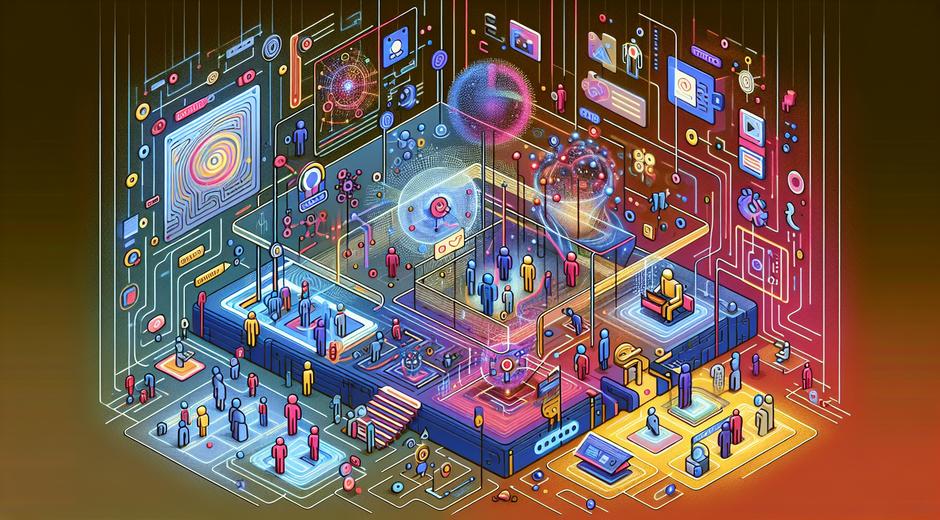


AI NPC behavior The New Frontier in Immersive Gameplay
AI NPC behavior is reshaping how players experience virtual worlds. As artificial intelligence advances game designers can craft characters that feel alive responsive and unpredictable in ways that were once impossible. This article explores the mechanics behind modern AI NPC behavior the design principles that lead to immersion and practical strategies studios can use to deploy smarter characters without compromising performance or player agency.
What We Mean by AI NPC behavior
AI NPC behavior refers to the systems and routines that determine how non player characters perceive react and adapt within a game world. This can include simple scripted reactions complex decision making and learning based methods that let NPCs adjust their behavior over time. The goal is to create believable agents that support narrative gameplay and emergent interactions.
At its core AI NPC behavior balances three goals
- Believability Agents should act in ways that match player expectations for their role
- Responsiveness Agents should react to player actions in timely and coherent ways
- Scalability Systems should operate across many agents without killing performance
Common Techniques Behind Smarter NPCs
Game studios use a mix of classic AI approaches and modern machine learning methods to produce varied AI NPC behavior. Each approach has trade offs in development time control and runtime cost.
Behavior trees are a popular tool for scripting complex sequences of actions while retaining modularity and debug friendly structure. Utility based systems assign scores to potential actions and pick the best option based on context. Rule systems let designers encode domain knowledge directly which is useful for predictable story driven scenarios.
On the machine learning side reinforcement learning enables agents to learn policies through trial and error which can unlock unexpected and rich behavior patterns. Imitation learning trains agents to mimic human play traces offering a shortcut to humanlike reactions. Hybrid systems combine learned models for perceptual tasks with scripted decision layers to maintain author control while gaining fluid movement and situational nuance.
Why Good AI NPC behavior Matters for Player Retention
Immersion drives engagement. Players stay longer in worlds where NPCs behave in believable ways where allies react convincingly to threats and where enemies provide meaningful challenge. Poor AI NPC behavior can break the illusion of life and make players notice the scaffolding behind the world.
Games that invest in quality AI NPC behavior see several benefits
- Greater emotional investment when characters react in ways that feel natural
- Richer emergent gameplay as NPCs behave outside of scripted sequences
- Reduced repetition when NPC decisions vary across play sessions
Design Principles for Better NPC Behavior
Designers who want robust AI NPC behavior should follow a few practical principles. First design for perception. Accurate sensing helps agents make sensible decisions so invest in clear line of sight pathfinding and context cues. Second keep AI goals simple and motivated. Agents with a short list of clear objectives behave more predictably and are easier to balance. Third preserve author intent. Even when using learning methods designers need tools to nudge or constrain agents so they support the narrative.
Another key principle is graceful failure. When AI NPC behavior breaks it should fail in ways that are believable. Instead of teleporting or stalling let agents retreat seek cover or perform fallback animations. This preserves immersion even in edge cases.
Balancing Performance and Complexity
High fidelity AI NPC behavior can be computationally expensive. Studios must balance per agent complexity with the number of active agents on screen. Common strategies include hierarchical processing where only a subset of NPCs receive full updates while others run cheaper approximations. Level streaming and culling reduce the active population outside the player focus. Finally use of lightweight learned models for perception combined with deterministic decision layers helps limit runtime cost.
If you are exploring best practices across games and need a central hub for insights consider seeing recent coverage and case studies at gamingnewshead.com where developers share production stories and tools.
Testing Tactics for Reliable AI NPC behavior
Testing is essential. Unit tests simulate sensory input and check expected reactions. Automated regression tests run scenarios to ensure new changes do not degrade AI NPC behavior. Playtesting remains invaluable because human players spot emergent problems that scripted tests miss. Instrument AI agents to log decisions and state transitions so developers can replay and debug complex interactions.
Testing should also include load scenarios to ensure many NPCs can coexist without frame rate collapse. Profiling can reveal expensive perception checks or path queries that are safe to reduce for distant agents.
Ethical and Social Considerations
AI NPC behavior is not only a technical concern. As NPCs become more realistic players may form attachments or act on perceived intentions. Designers must consider consent privacy and representation. Games that simulate sensitive scenarios need care to avoid harmful stereotypes or manipulative mechanics. Clear boundaries and transparency about learning systems are part of responsible design.
For studios that need external consultation or partners that offer eco friendly hosting for compute heavy training workloads check resources at Ecoglobalo.com which provides infrastructure and sustainability advice for AI projects.
Future Trends in AI NPC behavior
Looking ahead AI NPC behavior will grow more dynamic with advances in large models and multi agent coordination. We will see NPCs that can explain their choices negotiate with players and remember long term interactions across sessions. Cross game standards for agent memory and personality traits may emerge making it easier to port characters between titles.
Procedural narrative tools combined with adaptive NPCs will enable experiences that change based on player style. Multiplayer games will especially benefit as NPCs fill gaps in social systems offering companionship or competition tailored to the community.
Practical Tips for Teams Building AI NPC behavior
Teams working on AI NPC behavior can adopt these steps for faster progress
- Start with small prototypes that isolate perception action and memory loops
- Use data driven tuning rather than magic numbers to set thresholds
- Keep fallback behaviors simple so agents stay coherent when edge cases occur
- Instrument early and iterate based on player feedback
- Balance compute by tiering agent fidelity by proximity to the player
Conclusion Crafting Characters Players Believe
AI NPC behavior sits at the intersection of art design and engineering. When done well NPCs elevate the player experience turning scripted spaces into living worlds. By combining principled design modular systems and careful testing teams can build agents that are both believable and performant. As tools mature and infrastructure evolves AI NPC behavior will continue to unlock new forms of interactive storytelling and emergent play.
For ongoing guides analysis and developer interviews that focus on practical approaches to modern AI NPC behavior stay tuned to our site and partner resources for the latest breakthroughs.